

FAQ for Annapurna Circuit Trek
28th Jan, 2026

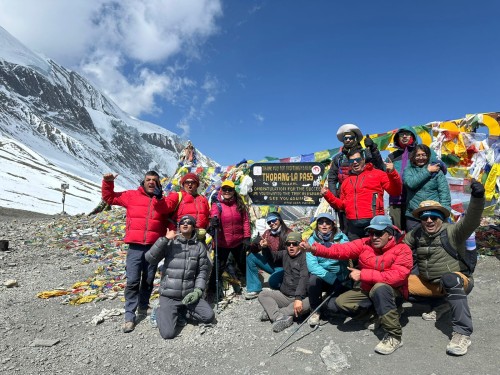
Frequently Asked Questions about the Annapurna Circuit Trek provides valuable information and advice for both first-time and experienced trekkers planning this iconic journey. By reading this resource, trekkers can prepare thoroughly, avoid common mistakes, and fully enjoy the breathtaking views, rich Himalayan culture, and the once-in-a-lifetime adventure of circling the Annapurna Mountain Range and other surrounding peaks while crossing the challenging Thorong La Pass (5,416 meters).
Table of Contents
The Annapurna Circuit Trek is one of the most famous and highly preferred trekking routes in Nepal, second only to the Everest Base Camp Trek. Before planning this trek, many trekkers have questions related to logistics, safety, difficulty, and preparation. Our comprehensive questions and answers are designed to help you plan your trek efficiently and confidently.
Where is the Annapurna Circuit Trek Route Located?
The Annapurna Circuit Trek Route is located in central Nepal, within the Annapurna region of the Himalayas, northeast of Pokhara City. The trek circles the Annapurna Massif and passes through the districts of Lamjung, Manang, Mustang, and Myagdi.
The trek usually starts from Dharapani, accessed via Dumre and Besisahar, which lie between Kathmandu and Pokhara, and ends in Jomsom, Tatopani, or Birethanti, all located northwest of Pokhara. The route crosses the famous Thorong La Pass (5,416 meters), one of the highest trekking passes in the world.
Why Should I Choose the Annapurna Circuit Trek?
The Annapurna Circuit Trek offers several outstanding features, including a complete circuit of the Annapurna Massif and surrounding peaks and the thrilling crossing of Thorong La Pass (5,416 meters). The journey begins in the lowlands and gradually ascends to high altitude before descending again to lower elevations after crossing the pass.
The route is easily accessible and offers good accommodation and food, making it a budget-friendly trekking option. Trekkers enjoy magnificent mountain views while passing through traditional Nepali villages, terraced farmlands, lush valleys, and the scenic Marsyangdi and Kali Gandaki valleys. Along the way, you will discover ancient monasteries and temples, experience vibrant Gurung villages influenced by Tibetan culture, and witness unique traditions and spiritual heritage. There are also opportunities to see local wildlife.
Overall, Choosing the Annapurna Circuit Trek is the perfect choice for an once-in-a-lifetime adventure, blending natural beauty, cultural immersion, and personal achievement.
When Is the Best Time for the Annapurna Circuit Trek?
The best time to trek the Annapurna Circuit is during autumn (September to November) and spring (March to May). Both seasons offer excellent opportunities to enjoy natural beauty, cultural richness, and pleasant trekking conditions.
In spring, the weather is mild, skies are generally clear, and rhododendrons bloom in vibrant colors, making the trails especially scenic and ideal for photography. In autumn, trekkers are rewarded with crisp air, stable weather, and the clearest views of the Annapurna Massif and surrounding Himalayan peaks.
While winter (December to February) trekking is possible, temperatures can be extremely cold, and occasional heavy snowfall may make crossing Thorong La Pass (5,416 meters) difficult. The summer/monsoon season (June to August) brings rain, leeches, and slippery trails, making trekking less favorable.
We at High Pass Adventure recommend planning your trek in spring or autumn, with December also being a suitable option for trekkers who are well-prepared for colder conditions and accompanied by an experienced guide and strong porter.
What Is the Standard Itinerary for the Annapurna Circuit Trek?
The standard itinerary for the Annapurna Circuit Trek is 15 days in total, as included in our package. This duration covers arrival and departure in Kathmandu, trekking days, and accommodation in Kathmandu.
The day-by-day itinerary is provided below:
Day 1: Arrival in Kathmandu and transfer to hotel by private vehicles (1350 m) overnight at hotel
Day 2: Trekking preparation day, including permit processing and gear list check. Overnight at Kathmandu hotel
Day 3: Drive to Dharapani (1900 m) total 9 hrs drive. Overnight in tea- house
Day 4: Trek to Chame (2710 m) 5/6 hrs walk. Overnight in Tea- house
Day 5: Trek to Upper Pisang (3300 m) 6 hrs walk. Overnight in tea-house
Day 6: Trek to Manang (3540 m) 7-8 hrs walk. Overnight in tea- house
Day 7: Rest Day for acclimatization
Day 8: Trek to Yak Kharka (4050 m) 5/6 hrs walk. Overnight in tea- house
Day 9: Trek to Thorong Phedi (4450 m) 4/5 hrs walk. Overnight in tea- house
Day 10: Trek to Muktinath (3800 m) via Thorong-La Pass (5416 m) 8/9 hrs walk. Overnight in tea- house
Day 11: Drive to Tatopani (1200 m) 4/5 hrs. Overnight in teahouse
Day 12: Trek to Ghorepani (2870 m) 7-8 hrs walk. Overnight in teahouse
Day 13: Morning hiking up to Poon Hill (3210 m) and trek back to Nayapul then drive to Pokhara. Total 8 hours walk and 2 hrs drive. Overnight in Tea- house
Day 14: Drive back to Kathmandu by tourist bus and transfer to Hotel
Day 15: Final departure to you home or your next destination
How Much Does the Standard 15-Day Annapurna Circuit Trek Cost?
The cost of our standard 15-day Annapurna Circuit Trek is USD 950 per person, based on a minimum of two participants. This package includes 12 nights on the trekking route and 3 nights in Kathmandu, covering both your arrival and departure.
The price includes public transportation, guide and porter services, trekking permits, basic twin-sharing accommodation, and three meals per day, along with one cup of tea or coffee with each meal. Full details can be found in the “Cost Includes” and “Cost Excludes” sections.
Additional expenses such as hot showers, internet access, private attached rooms, extra food and drinks, or luxury accommodations are not included and must be paid directly by trekkers. The total cost may vary depending on factors such as trek duration, comfort level, group size, itinerary, transportation choice, and overall services selected.
At High Pass Adventure, we strive to offer affordable and transparent pricing while providing the best possible service for all trekkers exploring the Annapurna Circuit.
What Is the Booking and Payment Method for the Annapurna Circuit Trek?
The booking and payment process for the Annapurna Circuit Trek with High Pass Adventure is simple and straightforward. After selecting your trip on our website, you can ask any questions, and we will provide all the necessary information via email or WhatsApp.
If you are satisfied with the information and wish to book, you need to send us your preferred dates and a copy of your passport to reserve your trek guide.
To confirm your booking, a 15% deposit of the total trip cost is required in advance, payable via bank transfer or Western Union. The remaining balance can be paid upon arrival in Kathmandu, either in cash or by bank transfer.
What are the cancellation and refund policies for the trip cost?
If you wish to cancel your trip and request a refund of the advance payment, please note that our cancellation and refund policies are clear and straightforward.
To cancel a trip, you must first inform us by email. Once we receive your cancellation request, we will proceed with canceling your hotel bookings, transportation, and guide arrangements.
Regarding refunds, 15% of the advance deposit, which confirms your booking, will be treated as a cancellation fee. This means the deposit is partially refundable, depending on the cancellation conditions outlined below.
If you are already in Nepal before the trip begins and need to cancel due to a family emergency or health issue, we will refund the full deposit.
However, if you are still in your home country and wish to cancel the trip, we can provide a refund, but not via direct international transfer, as sending money from Nepal to other countries can be difficult. In such cases, you may:
- Use the deposit for a future trek in Nepal, or
- Authorize a friend or representative to collect the refund on your behalf.
Cancellation by Clients under Normal Conditions
- 75% of the trip deposit is refundable if cancellation is made 30 days prior to the trip
- 60% of the trip deposit is refundable if cancellation is made 25 days prior to the trip
- 45% of the trip deposit is refundable if cancellation is made 15 days prior to the trip
- The trip deposit is non-refundable if cancellation is made 7 days prior to the trip
Why Should I Book the Annapurna Circuit Trek with High Pass Adventure?
Booking the Annapurna Circuit Trek with High Pass Adventure comes with many benefits. We are always online and responsive, answering all client questions promptly. We create tailor-made and customized itineraries, offer reasonable and transparent pricing, and arrange all logistics, including accommodation, meals, transportation, and trekking permits.
We provide experienced guides and strong, reliable porters who bring friendship, fun, convenience, adventure, and—most importantly—safety throughout the trek. Our pricing is clear, with no hidden costs.
With a 99% trip success rate across Nepal and many repeat clients, High Pass Adventure is a trusted choice for your Annapurna Circuit Trek.
Can We Get a Visa on Arrival at the Airport in Nepal for the Annapurna Circuit Trek?
Yes, you can easily obtain a visa on arrival at the airport in Nepal. However, you must complete the online visa application form with your personal details before or upon arrival at the entry point.
Your passport must be valid for at least six months. You will also need 3–4 passport-size photos. If you do not have photos, they can be taken at the airport for an additional USD 10.
Visa fees can be paid in the following currencies: Euro, Swiss Franc, Pound Sterling, US Dollar, Australian Dollar, Canadian Dollar, Hong Kong Dollar, Singapore Dollar, and Japanese Yen.
The visa fees are:
- USD 30 for 15 days
- USD 50 for 30 days
- USD 125 for 90 days
For more detailed and updated information, please visit our website.
May I Choose My Own Departure Date for the Annapurna Circuit Trek?
Yes, you can choose your own departure date for the Annapurna Circuit Trek if you prefer a private trek, based on your holiday schedule.
If you wish to join a group trek, we offer fixed departure dates for the Annapurna Circuit Trek. However, these dates may not always match your travel plans. If the scheduled dates are not suitable, please inform us at least two months in advance, and we will try to arrange a group departure that fits your preferred timeframe.
This helps us organize and create group departures for the Annapurna Circuit Trek according to your schedule.
How Does the Annapurna Circuit Trek Start and End?
The Annapurna Circuit Trek usually begins with your arrival in Kathmandu from your home country. You will stay in Kathmandu, where the required permits for the Annapurna Circuit Trek are arranged. The following day is typically a rest day to recover after a long international flight.
After that, the journey continues with a scenic drive from Kathmandu to Besisahar and onward to Dharapani by vehicle, which serves as the starting point of the trek. High Pass Adventure arranges all logistics, including airport pickup, hotel accommodation in Kathmandu, trekking permits, and transportation to Dharapani.
From Dharapani, the trail follows the classic route through Chame, Pisang, Manang, Yak Kharka, and Thorong Phedi, before crossing the challenging Thorong La Pass (5,416 m). After crossing the pass, the trek descends to Muktinath. The next day, you drive to Tatopani, followed by a trek to Ghorepani the following day.
After visiting Ghorepani, the trek continues to Birethanti, where you can take a vehicle to Pokhara. The next day, you drive back to Kathmandu, and on the following day, you depart for your home country.
What Is the Difficulty Level of the Annapurna Circuit Trek?
The Annapurna Circuit Trek is considered moderate to challenging due to its length, duration, and high-altitude terrain.
The trek is moderate up to Manang, while the section from Manang to Muktinath via Thorong La Pass (5,416 m) is the most challenging part of the journey. At higher altitudes, the trail can be rocky and narrow, with frequent ascents and descents.
Trekkers usually walk 5 to 8 hours per day over approximately 12 days. During the peak trekking seasons, finding accommodation can sometimes be challenging, along with a few other minor difficulties.
However, our experienced guides manage all logistics, including teahouse accommodation, rest stops, acclimatization days, altitude management, and pacing. With a slow walking pace and short, steady steps, the Annapurna Circuit Trek can be completed safely and comfortably without unnecessary stress.
Do I Need Any Training for the Annapurna Circuit Trek?
Yes, some training is recommended for the Annapurna Circuit Trek, especially if you are a beginner. However, the trek does not require technical climbing skills, so no special or advanced training is necessary.
For trekkers with prior hiking or trekking experience who are physically fit, specific training is not strictly required. That said, regular physical activities such as walking, day hikes, running, biking, jogging, or swimming are highly recommended.
Good overall fitness, the right mindset, and strong determination will greatly help ensure a more comfortable, safe, and enjoyable trekking experience.
What Transport Options Are Available for the Annapurna Circuit Trek?
There are two transport options available for the Annapurna Circuit Trek: public transportation and private transportation.
Public transportation is more affordable, while private transportation is more comfortable, faster, and more convenient. If you are traveling in a group, we highly recommend a private vehicle for a smoother and more comfortable journey.
According to our Annapurna Circuit Trek itinerary, transportation is required for the following routes:
- Kathmandu to Dharapani
- Muktinath to Tatopani
- Birethanti to Pokhara
- Pokhara to Kathmandu
We can arrange both public and private transportation options based on your preference and budget.
What Are the Required Permits for the Annapurna Circuit Trek?
The required permits for the Annapurna Circuit Trek are listed below. Please note that permit costs vary depending on nationality.
Required Permits:
- Annapurna Conservation Area Project (ACAP) Permit
Cost: NPR 3,000 per person for foreign nationals and NPR 1,000 per person for SAARC nationals
- Trekkers’ Information Management System (TIMS) Card
Cost: NPR 2,000 per person for all trekkers
Most of these permits are issued in Kathmandu through a registered trekking agency such as High Pass Adventure.
These permits are mandatory, as they help regulate tourism, support local communities, and contribute to conservation efforts in the Annapurna region. Without the required permits, you will not be allowed to continue the Annapurna Circuit Trek.
What Types of Accommodation Are Available During the Annapurna Circuit Trek?
A wide range of accommodations is available during the Annapurna Circuit Trek, from basic to moderately comfortable lodges.
Basic accommodation usually means a twin shared room with a shared bathroom and access to a hot shower. In this region, moderately comfortable lodges typically offer private rooms with attached bathrooms and hot showers.
Rooms generally include twin beds with clean bedding, pillows, and blankets. Most lodges are well managed, and there are sufficient accommodation options along the trekking route.
In our standard Annapurna Circuit Trek package, we provide the best available lodges in each village, usually offering private twin rooms with a shared indoor bathroom. In some locations, we can also arrange rooms with attached bathrooms, subject to availability.
We strongly recommend that trekkers bring a sleeping bag for extra warmth and comfort, especially at higher altitudes such as Thorong Phedi. As altitude increases, accommodation becomes more basic; however, we always do our best to ensure a comfortable and pleasant stay for all trekkers.
What Types of Food Are Available During the Annapurna Circuit Trek?
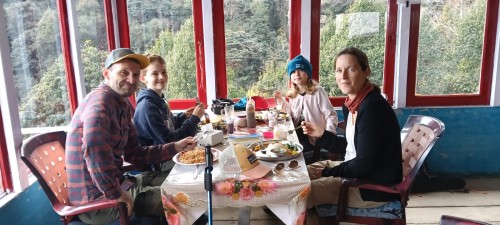
A wide variety of food is available during the Annapurna Circuit Trek, ranging from Western dishes to traditional Nepali and local cuisine. However, meals at higher-altitude locations are generally more basic compared to those at lower elevations along the route.
At most stops, teahouses, restaurants, and lodges offer menus with similar items, including local, Nepali, and international options. Meals are usually prepared by the lodge family, though some places may hire a special cook. The cooks are generally skilled, but the taste may differ slightly from Western-style food.
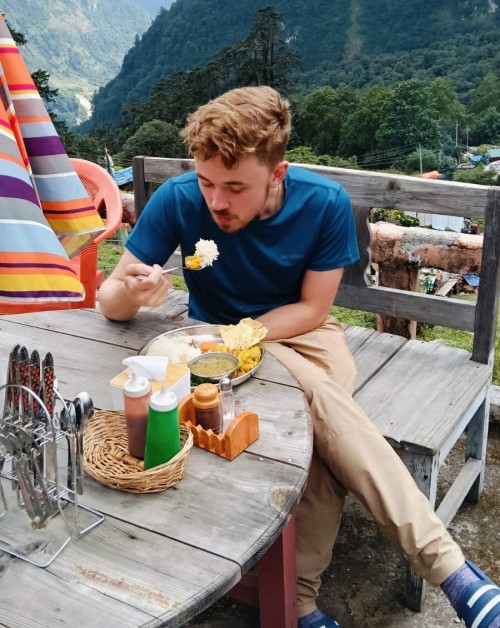
One of the most popular and highly recommended dishes is Dal Bhat, a traditional Nepali meal served with rice, lentil soup, vegetables, pickles, and papad. While Dal Bhat is served everywhere along the trek, its taste can vary depending on the quality of rice and vegetables used at each location.
You’ll also find many other options on the menu, including burgers, pizza, momo (dumplings), soups, potato dishes, some meat items, baked goods, fried foods, and more.
What Is the Packing List for the Annapurna Circuit Trek?
Once you decide to go on the Annapurna Circuit Trek, it’s important to know which items to pack. While most travel equipment can be brought from home, some items can also be rented or purchased in Kathmandu, especially around Thamel, if you forget or do not have them.
We recommend that all trekkers pack light, with a maximum of 15 kg, carrying only the essentials. These basic items are suitable for trekking in Nepal in all seasons, though some gear may vary depending on the specific time of year.
Suggestion packing list is given below:-
- Base layers (moisture-wicking tops & thermal underwear)
- Mid layers (fleece or light down jacket)
- Outer layer (waterproof/windproof jacket & pants)
- Trekking pants + 1 comfy pair for evenings
- T-shirts (quick-dry, avoid cotton)
- Warm hat/beanie & sunhat/cap
- Gloves (lightweight gloves)
- Trekking socks (3–5 pairs)
- Buff/neck gaiter (for dust, sun, and cold)
- Sturdy trekking boots (broken-in, waterproof if possible)
- Lightweight camp shoes/sandals (for evenings & teahouses)
- Trekking poles (lifesaver for long ups/downs)
- Sleeping bag (rated at least -10°C / 14°F for high passes)
- Rain gear (coat, rain cover for the bag)
- Waterproof jacket and trousers
- Daypack 40 L
- Headlamp + extra batteries
- Sunglasses (UV protection—snow glare is real)
- Reusable water bottles (or hydration bladder, 2–3L capacity) - Purification equipment, or purification tablets
- Power bank for mobile charge
- Energy bars, nuts, chocolate
- MISCELLANEOUS (Cameras, Torch Light, Binoculars, Reading book, Travel games)
Health & Safety
- Personal first aid kit (band-aids, blister care, meds)
- Diamox (if your doctor recommends for altitude)
- Sunscreen (SPF 50+) & lip balm with SPF
- Hand sanitizer + wet wipes
- Mask/scarf for dusty trails
- Antibiotic ointment (like Neosporin)
- Blister treatment (Compeed, moleskin, or blister plasters)
- Small scissors & tweezers
- Pain relievers (Paracetamol, Ibuprofen, or Aspirin)
- Antihistamines (for allergies)
- Antidiarrheal (Loperamide / Imodium)
- Rehydration salts / electrolyte packets
- Antacids (for indigestion)
- Broad-spectrum antibiotics (consult your doctor before carrying)
Do We Need a Guide and Porter for the Annapurna Circuit Trek?
A guide is highly recommended for the Annapurna Circuit Trek. Experienced trekkers who are familiar with the route, have prior high-altitude trekking experience, and can comfortably carry 10 kg of gear may choose to trek without a guide or porter.
For beginners, having an experienced guide and a strong porter greatly enhances the trekking experience and ensures safety throughout the journey. A guide assists trekkers at every step by arranging accommodation, meals, transportation, and permits, and shares valuable knowledge about the region’s natural environment, culture, and local communities. Guides are also trained to recognize the symptoms of high-altitude sickness and provide guidance for prevention and response.
A porter helps carry your luggage, allowing you to focus entirely on enjoying the trek. With a professional guide and porter, you can enjoy a smooth, stress-free trek and fully immerse yourself in the adventure of the Annapurna Circuit.
How Much Weight Do Porters Carry for the Annapurna Circuit Trek?
The weight of luggage carried by porters is regulated by the Government of Nepal, local authorities, and trekking associations. For the Annapurna Circuit Trek, the maximum luggage weight per porter is 25–30 kg.
Typically, one porter is assigned for every two trekkers. While local porters may be able to carry more than 50 kg, this is not allowed for trekking. In some cases, if the luggage exceeds 30 kg, trekkers will need to pay extra for the additional weight.
Are Charging Facilities and Internet Service Available During the Annapurna Circuit Trek?
Along the Annapurna Circuit Trek, there are charging points available at most teahouses and lodges. However, electricity is generally not available in the rooms, so you will need to charge your devices in the dining area. We highly recommend bringing a power bank to ensure your devices stay charged throughout the trek and in your room.
Internet access is also available along most of the trekking route, but service can sometimes be unreliable due to weather conditions or power outages. 4G service works in many areas, but it may be limited or unavailable at higher altitudes, such as from Ghunsang to Thorong La Pass.
Planning ahead by bringing your own power sources and purchasing a Nepali SIM card (Ncell or Nepal Telecom) will help you stay connected and prepared during your Annapurna Circuit Trek.
How Safe Is the Annapurna Circuit Trek?
The Annapurna Circuit Trek is very safe during the spring (March to May) and autumn (mid-September to mid-December) seasons when accompanied by our experienced trekking guides and strong porters.
Trekking independently can sometimes be risky due to landslides or snowfall, but our High Pass Adventure team ensures the safety and security of all clients by providing the necessary trekking gear to handle any potential hazards.
The trek is less safe during the summer due to heavy rainfall, which can make trails slippery and humid. Winter trekking is generally safe, although temperatures are lower at higher altitudes.
High Pass Adventure is always with you to assist in any emergencies, ensuring a safe and enjoyable Annapurna Circuit Trek experience.
How Busy Is the Annapurna Circuit Trek?
The Annapurna Circuit Trek is quite busy during the spring (March to May) and autumn (September to November) seasons, second only to the Everest Base Camp Trek in popularity. During this period, you will encounter many foreign and local trekkers, as well as porters, yaks, horses, donkeys, and some vehicles along the trail up to Manang. In contrast, the trek is much less busy during the summer and winter seasons due to unfavorable weather and colder conditions, making these times quieter for trekking.
Do I Need Travel Insurance for Annapurna Circuit Trekking?
Yes, travel insurance is required for the Annapurna Circuit Trekking, as well as for other trekking routes in Nepal. It is essential to cover potential costs in case of an emergency and to ensure quick medical evacuation if needed.
You should make sure that your travel insurance covers the highest elevation of your trek for emergency evacuation. If you need recommendations, please refer to our list of recommended travel insurance companies.
How to Avoid Altitude Sickness during the Annapurna Circuit Trek?
To avoid altitude sickness during the Annapurna Circuit Trek, follow these guidelines:
- Follow our flexible itinerary.
- Drink more water than usual and stay well hydrated.
- Eat enough food to maintain energy.
- Walk slowly on ascents to allow your body to adjust.
- Consider taking Diamox (a medication for altitude sickness) if advised by your doctor.
After reaching 3,500 meters, it is recommended to spend an extra night for acclimatization and follow the “climb high, sleep low” principle. If you experience any symptoms of altitude sickness, consult your guide immediately, who will advise you on the necessary steps to stay safe.
Should I Bring Medicines for the Annapurna Circuit Trek?
Yes, you should bring necessary medicines from your home country for the Annapurna Circuit Trek. If you are taking any regular medication, make sure to consult your doctor before the trek, as some medicines available in Nepal may not be effective.
While some local medicines are available along the trekking route, they may not work as expected for foreigners due to differences in body physiology, climate, and environment. Therefore, we highly recommend that all international trekkers bring their essential medicines from home when trekking in Nepal.
Is Tipping Necessary for Porters and Guides After Completing the Annapurna Circuit Trek?
Yes, tipping is customary for guides, porters, and supporting staff, as they all contribute to the successful completion of your trek. Tips are given as a gesture of appreciation and are usually offered at the end of the trek.
It is common for travelers to tip around 10–15% of the total trip cost, though this amount can be adjusted based on the quality of service received. You can collect tips from all trekkers and distribute them among your guides and porters. They typically accept US dollars, Euros, Pounds, or Nepali currency.
The High Pass Adventure team, who will support you throughout the Annapurna Circuit Trek, is dedicated to providing excellent service and ensuring a memorable, once-in-a-lifetime experience. Your tips are a meaningful way to recognize their hard work and commitment.
Are you interested on any of your travel serveices?
Make Inquiry NowRecent From Blog
15th Jun, 2023
21st Feb, 2021
28th Feb, 2018
5th Sep, 2023

13th May, 2019
19th Feb, 2019
8th Feb, 2021
21st Jan, 2021
29th Jul, 2020
3rd May, 2019
30th Apr, 2020

3rd Apr, 2020
17th Jul, 2020
26th Mar, 2020
31st Mar, 2020
19th Jun, 2023
11th Feb, 2020
11th Mar, 2020
27th Sep, 2019
17th May, 2019
26th Jul, 2020
6th May, 2019
5th Mar, 2019
7th Mar, 2020
18th Feb, 2019
12th Sep, 2019

27th Mar, 2018
27th Mar, 2019
2nd Mar, 2019
16th Jan, 2019

1st Jul, 2023
5th Jul, 2023

5th Jul, 2023

5th Jul, 2023

5th Jul, 2023
5th Dec, 2019
6th Jan, 2019
28th Feb, 2018
9th Dec, 2018
11th Dec, 2018

5th Oct, 2023

3rd Jan, 2024
.jpg)
27th Jan, 2024
29th Jan, 2024
19th Jan, 2025

7th Feb, 2025

17th Feb, 2025
9th Mar, 2025

15th Mar, 2025

18th Mar, 2025

23rd Mar, 2025

25th Mar, 2025

26th Mar, 2025

24th Apr, 2025

21st May, 2025

21st May, 2025

22nd Jun, 2025

22nd Jun, 2025
4th Jul, 2025

14th Jul, 2025

14th Sep, 2025
26th Sep, 2025
20th Dec, 2025
28th Jan, 2026
17th May, 2026
18th May, 2026
2nd Jun, 2026
7th Jun, 2026
9th Jun, 2026
13th Jun, 2026